Wildfire History
The 2024 Canadian Wildfires: Fires That Never Went Out, and the Case for Early Detection
Some of the fires that burned Canada in 2024 had smoldered under the snow since 2023. Others began with a fallen tree or a bolt of lightning. Here is what burned, in charts and numbers, and what might have been saved if someone had been watching.
Some of the 2024 Canadian wildfires were already months old when the year began. They had started in 2023, sunk into the soil and smoldered under the snow all winter. One expert estimates that nearly 10% of the land burned in Canada in 2024 was lost to fires like these, fires that never went out. Other disasters that year began with a fallen tree, a suspected abandoned campfire and a few bolts of lightning. Nearly all of them had one thing in common: a short time when they were small. Here is what burned, in charts and numbers, and what might have been saved if someone, or something, had been watching.
- Land burned About 5.38 million hectares (53,780 km², or 13.3 million acres), roughly the size of Nova Scotia.
- Fires 5,686 by late November.
- People evacuated More than 59,000, including 25,000 from Jasper National Park.
- Buildings lost 396, of which 358 were in the town of Jasper.
- Insured losses About C$1.3 billion in Jasper alone.
- Lives lost A firefighter and a helicopter pilot, both on duty.
Key takeaways
- Alberta entered 2024 with more than 60 wildfires still burning from the year before. The usual number is about six.
- The fire that emptied Fort Nelson was 50 hectares at 5:25 p.m. and 800 by 10 p.m.
- Near Jasper, a satellite showed a fire of about 3,100 hectares less than four hours after lightning struck.
- Most Canadian wildfires that crews set out to stop are contained within a day of being found, and federal scientists say that depends on early detection and a rapid response.
- In Alberta, lookouts and patrols found 58% of wildfires over 16 years. The rest came from other sources, such as calls from the public.
How much burned in the 2024 Canadian wildfires?
The season count reached 5.378 million hectares, or about 53,780 km², by November 20. A September tally by the Canadian Interagency Forest Fire Centre stood at 5.32 million. Satellite mapping gives a similar figure, 5.15 million. The four worst-hit western and northern jurisdictions accounted for 70% of the total.

Province by province

Timeline: how the season unfolded
- Winter: Fires from 2023 smolder beneath the snow. Around 80 are still active in northeastern British Columbia alone.
- May 10: The Parker Lake fire forces the evacuation of Fort Nelson and the Fort Nelson First Nation.
- May 14: Thousands of people leave four neighborhoods of Fort McMurray, Alberta.
- June: A fire suspected to have begun as an abandoned campfire threatens Fort Good Hope, Northwest Territories, and grows to 8,200 hectares. On June 28, pilot Tom Frith dies in a helicopter crash while fighting a fire in the territory.
- July 12: About 9,600 people are told to leave Labrador City.
- July 22: Fires break out in Jasper National Park. By 10 p.m. the whole park is ordered to evacuate.
- July 24: Fire reaches the town of Jasper and destroys 358 structures.
- August 3: Firefighter Morgan Kitchen, 24, is killed by a falling tree near Jasper.
- August 10–11: In two days, 313,000 hectares burn in the Northwest Territories.
What caused the 2024 Canadian wildfires?
Fires that never went out

Drought had dried the ground so deeply that fire could live in it. Scientist Mike Flannigan estimated that almost half a million hectares burned in 2024 because of these overwintering fires. Their locations are the least mysterious of any wildfire: they hide inside last year's burn. The hard part is seeing them. British Columbia's wildfire service says satellites and aircraft struggle to pick up smoldering fire beneath frozen ground, so its focus in spring is early detection along the edges.
Lightning
In British Columbia, lightning caused more than 70% of the season's fires. It lit the fires that burned Jasper.
People and power lines
Wind threw a tree onto a power line near Fort Nelson. In Alberta, one utility says about 10% of wildfires are linked to electrical equipment. These fires start in known places, along lines that can be watched.
The human and natural toll
More than 59,000 people were evacuated, over 15,000 of them from First Nations communities. Two people who went to help never came home. In Jasper, insured losses came to about C$1.3 billion, the second costliest fire event in Canadian history. A year later, only 56 of the destroyed properties had been approved for rebuilding.
The fires also gave Canada what was then its second-highest wildfire carbon emissions in more than 20 years of records. Only 2023 was worse.
Fort Nelson: the window that closed
At 5:25 p.m. on Friday, May 10, the Parker Lake fire measured about 50 hectares. An hour later it was 400. By 10 p.m. it was 800.

The mayor said it was already several acres when the first crews got there. The evacuation order came shortly before 7:30 p.m. Every minute between the spark and the first alarm was taken from the people who had to stop it.
A fire does not wait to be noticed. Had fires like these been caught as a wisp of smoke, with crews ready to move, many could have been stopped, and the homes, forests and lives they went on to take could have been saved.
Labrador City: the fire that was almost out
The fire near Labrador City had been gently smoldering and under control that week. Then conditions changed. It ran 21 kilometers toward the town in four hours. The lesson is that detection does not end when a fire looks finished. Something has to keep watching.
Jasper: the limit, and what early warning still saved

Honesty matters here. Passing motorists filmed the fire within minutes, and it was already in the treetops. A federal study found that direct attack became ineffective within minutes, because drought, beetle-killed trees and storm winds were all in place. No alarm could have undone that. Prescribed burns and thinned forest, done years earlier, are what helped protect the town.
Early recognition of the danger saved something else. Within an hour and a half, campgrounds were being cleared. Within two hours, some of them had burned. About 25,000 people got out, and no resident or visitor is recorded among the dead.
The study also shows what cannot be relied on alone. One set of satellites first registered the South Fire nine hours after it began, with cloud likely hiding it at times. Had those strikes hit a valley with no road and no witnesses, the first news might have come when it was already enormous.
How early detection could have changed the outcome
The evidence: most fires can be stopped, if they are found
The same federal scientists point out that most Canadian wildfires given a full response are contained within the first day after detection. That, they write, depends on "early detection and rapid resource deployment" before a fire outgrows the crews sent to fight it. Natural Resources Canada puts it in numbers: about 3% of wildfires cause 97% of the area burned. Disasters come from the few that get away.

A trained lookout can spot a fire at a hundredth of a hectare, a patch 10 meters by 10 meters. That is the standard to aim for. But nobody can staff every ridge, every night, through smoke and storms.
The next step: eyes where there are none
Canada has begun to fill those gaps. British Columbia tested AI-assisted cameras in 2024. Vernon, B.C., has tried a network of air sensors and cameras. In Alberta, a power company is watching its lines with cameras that sweep the horizon every minute or two.
The harder problem is the remote valley: no power, no signal, nobody there. That is the gap the Wildfires Guard Sentinel is being designed for. Its developers, a startup near Seattle, describe a solar-powered watchtower that would combine cameras looking in every direction, thermal imaging for day and night, and sensors for smoke and gases. It would confirm a fire on the device and send its location by cellular, mesh or satellite link, along with a forecast of where the fire may run. The design target is an alert within 60 seconds of a fire becoming visible. The Sentinel is still in development and they need help to complete the development of the device.
It is the right goal. Think of the long edges of the 2023 burns where fire was waiting under the snow, the power line outside Fort Nelson, or the quiet ground near Labrador City. Those are places where a tireless watcher could make the difference between a crew and a catastrophe.
What it takes
- See it: lookouts, patrols, cameras, satellites and, as they prove themselves, autonomous sensors on the ground. No single tool is enough. In an Alberta test of six systems, a human lookout still found the most fires.
- Share it: an exact location, sent within minutes to fire crews and to people in the fire's path.
- Reach it: crews ready to go. A study of 13,000 Alberta fires calculated that more firefighters in the first hours would raise success on the hardest of the mid-range fires from 86.9% to 95.4%.
- Prepare for it: prescribed fire, thinning and fire-safe homes, for the fires that escape anyway.
The same lesson runs through the 2023 Canadian wildfires, the 2021 Russian wildfires and the 2024 South American wildfires. The fires that take the most are the ones that outrun us at the start.
The next fire is still small
The 2024 Canadian wildfires were not a surprise attack. Some had been burning for months. Others began beside a road, a wire or a campsite. Our conviction at Safeguard Nature is simple: a fire found in minutes is a fire that can be stopped, and what stood in its path can be saved. The tools to find it are being built. What they need now is people who believe they matter.
You can help. Learn about our mission, share this article, or support the fight against wildfires.
Frequently asked questions
How many acres burned in the 2024 Canadian wildfires?
About 13.3 million acres (5.38 million hectares, or 53,780 km²) by November 20, 2024. Since 2012, satellite data shows more only in 2023 and 2025.
What caused the 2024 Canadian wildfires?
Drought and heat dried out the forests. Lightning started many of the fires, including those that burned Jasper. Others came from people and power lines, and some had smoldered underground since 2023.
How many people died in the 2024 Canadian wildfires?
Two deaths are recorded: a firefighter struck by a falling tree near Jasper and a helicopter pilot in the Northwest Territories. Illness caused by smoke is not included.
Could early detection have stopped the fires?
It could have stopped many of them. Most Canadian wildfires given a full response are contained within a day of being found. A few, such as Jasper's, grow too fast in extreme conditions, and then early warning protects lives.
What technology can detect a wildfire early?
Lookout towers, patrol aircraft, AI-assisted cameras, satellites and ground sensors all play a part. Newer designs, such as the Wildfires Guard Sentinel now in development, aim to combine cameras, thermal imaging and air sensors in one self-powered unit for remote places.
Sources
- Canadian Forest Service, report NOR-X-433 on the 2024 Jasper Wildfire Complex (2025)
- Parks Canada, Timeline of the Jasper Wildfire
- Public Safety Canada, Parliamentary Committee Notes: Canadian Wildfires (2025)
- BC Wildfire Service, Wildfire Season Summary and Overwintering fires (2024)
- CBC News, via The Weather Network, Alberta has dozens of wildfires still burning this winter (2024)
- Fire Fighting in Canada, Wildfires in Canada: A 2024 round-up (2025)
- Global Wildfire Information System, via Our World in Data, Annual area burnt by wildfires (accessed November 2026)
- Wikipedia, 2024 Canadian wildfires
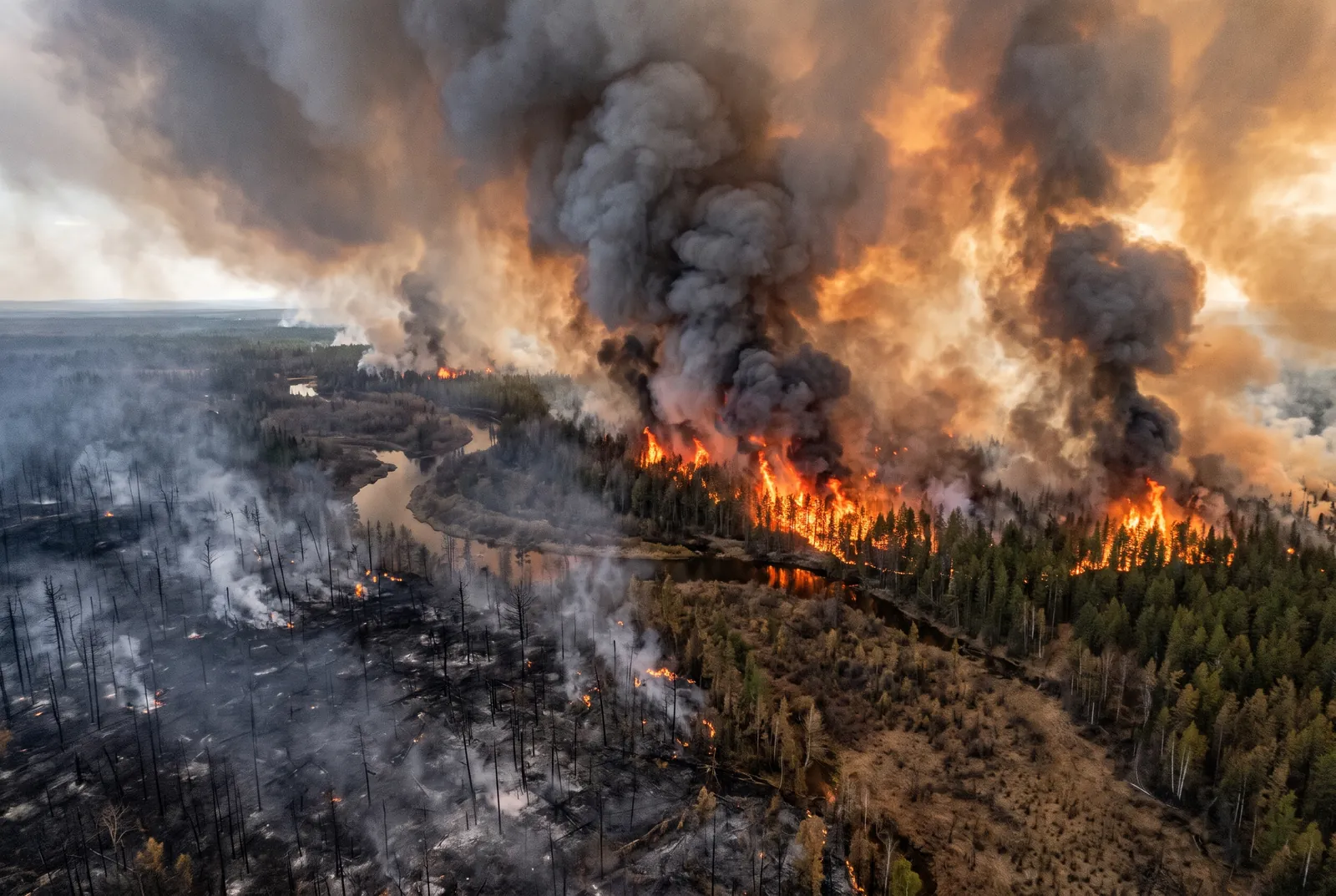
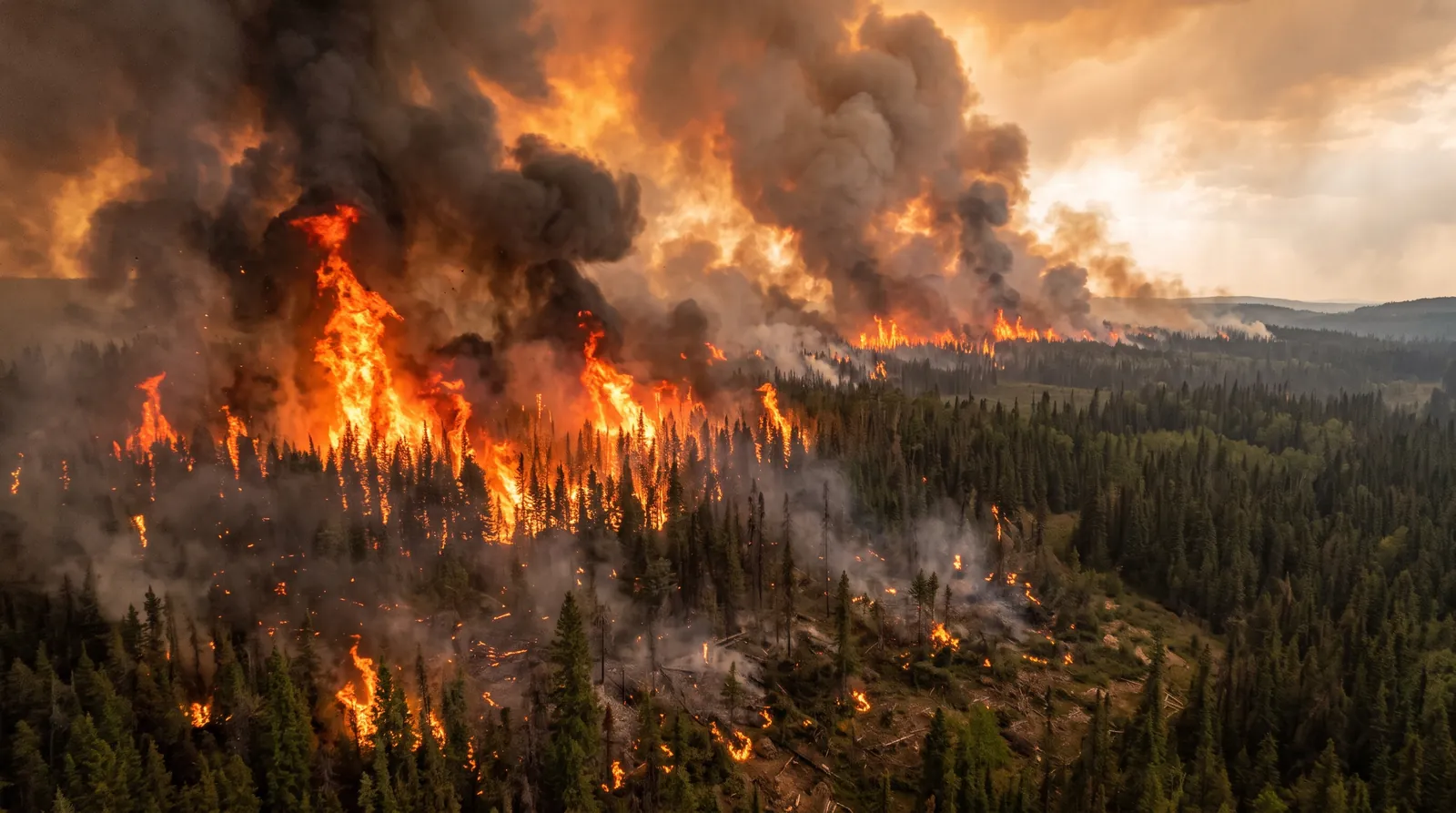
The picture at the top of this article is an AI-generated illustration.